On December 3rd, we marked a decade of the Meetings on Migratory Experiences (EEM) with a seminar that brought together the team that initiated these meetings — Inês Espírito Santo (CIES-Iscte & OEm), Ana Raquel Matias (CIES-Iscte), Cristina Santinho (CRIA-Iscte), José Mapril (CRIA NOVA) — as well as people who study migration in Portugal or work with migrants: researchers, master’s and PhD students, and representatives of public institutions and associations.
The EEM are the result of a collaboration that began in 2015 between CIES-Iscte and CRIA – Centre for Research in Anthropology as a Network, with the support of the Emigration Observatory since the very beginning.
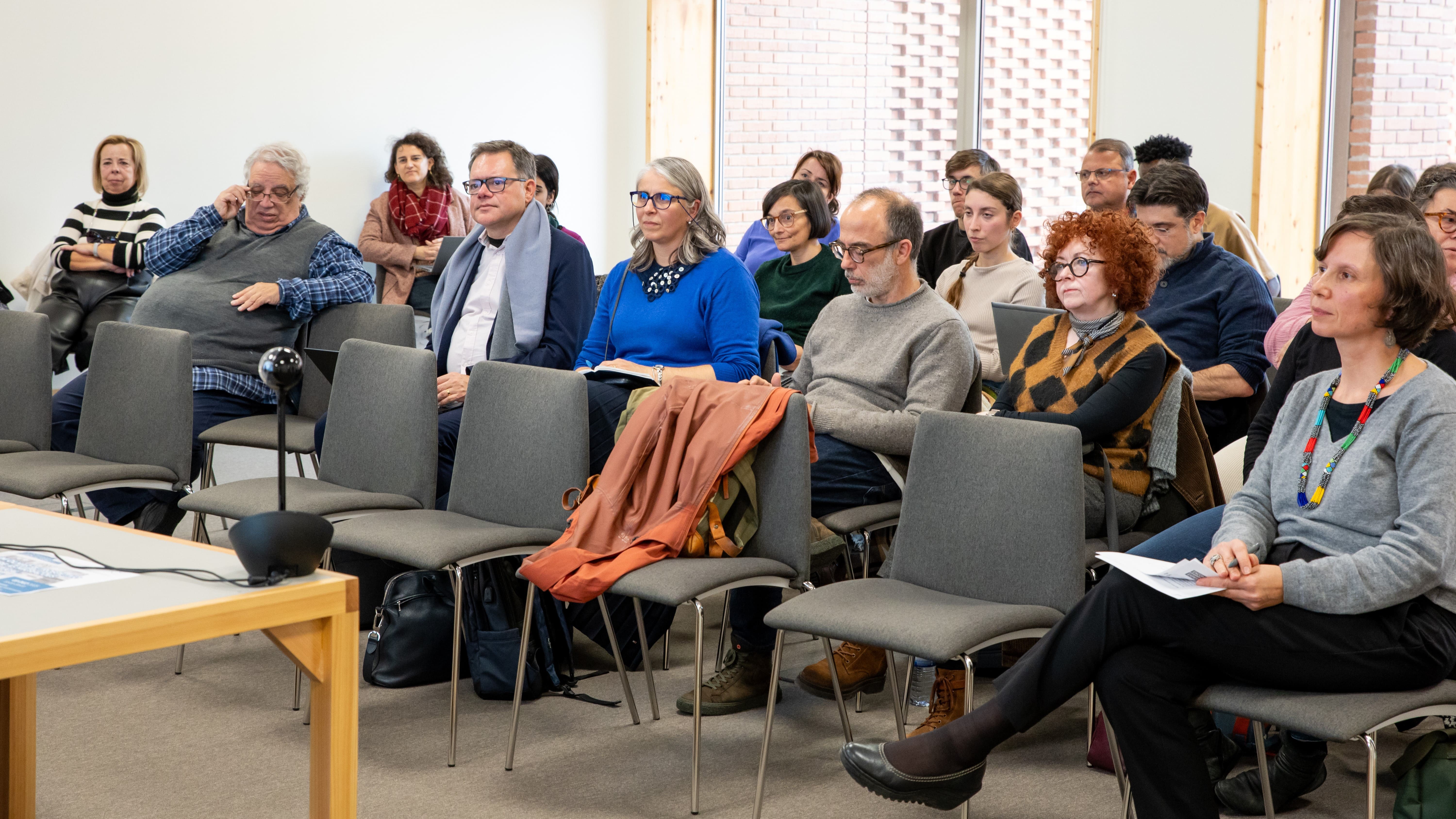
The event took place at Iscte – University Institute of Lisbon and was attended by the Director of CIES, Patrícia Ávila, and the President of CRIA, Catarina Alves Costa. Both highlighted the dynamism of the EEM and their interdisciplinary character. The importance of an event that allows for assessment and reflection on the future was also emphasised.
At this commemorative meeting, we recalled the political and economic context of 2015 and retraced the evolution of migration in Portugal up to the present day.
That year, Europe was shaken by the so-called “migration crisis”, and Syrian students arrived in Portugal. The country had been severely affected by the sovereign debt crisis, with a very significant increase in the unemployment rate and a massive outflow of labour (around 110,000 people per year). At the same time, there was growing advocacy for policies to attract immigrants in order to offset the high levels of emigration. New migratory profiles were also emerging: international students, privileged migrants holding golden visas or non-habitual resident status, mainly retirees. Changes were also observed in labour immigration, with significant and heterogeneous flows from Brazil — which became the most represented nationality in Portugal — and from Southeast Asia, which gained media attention due to cases of trafficking and exploitation in the agricultural sector, even before the pandemic.

Throughout the afternoon, all these issues were addressed, along with many others: sexual trafficking, asylum, and the paradigm shift of the past two years, marked by changes in the institutional and legislative framework and what this has meant in terms of a rollback of rights. Attention was also drawn to funding cuts and to the “blackout” of much statistical, administrative, and even research information that previously existed on foreigners in Portugal and is no longer available.
The event concluded with a roundtable discussion focusing on the current situation and issuing a challenge: “Not to see migration as a problem, but as an opportunity.”
We would like to thank all the invited speakers: Rui Pena Pires (OEm), Catarina Reis Oliveira (ISCSP & CAPP), Jennifer McGarrigle (IGOT-ULisboa), Maria Inês Amaro (CIES-Iscte), Sandra Benfica (MDM), Alina Esteves (IGOT-ULisboa), Dulce Pimentel (NOVA FCSH), Cyntia de Paula (Casa do Brasil), Paulo Fernandes (Academia +Integração), as well as the moderators Inês Vidigal (OEm) and Juliana Iorio (IGOT-ULisboa).
Event Press Clippings
Académicos criticam “esquizofrenia” das políticas sobre migrações (Jornal ECO)
Académicos lamentam não ser ouvidos e criticam "esquizofrenia" das políticas sobre migrações (Jornal de Notícias)
Les universitaires dénoncent la « schizophrénie » de l État sur l immigration (Vivre Le Portugal)
Academics call out government “schizophrenia” in approach to immigrants/ emigrés (The Resident)